Category: Art
-
Welcome to Paradise
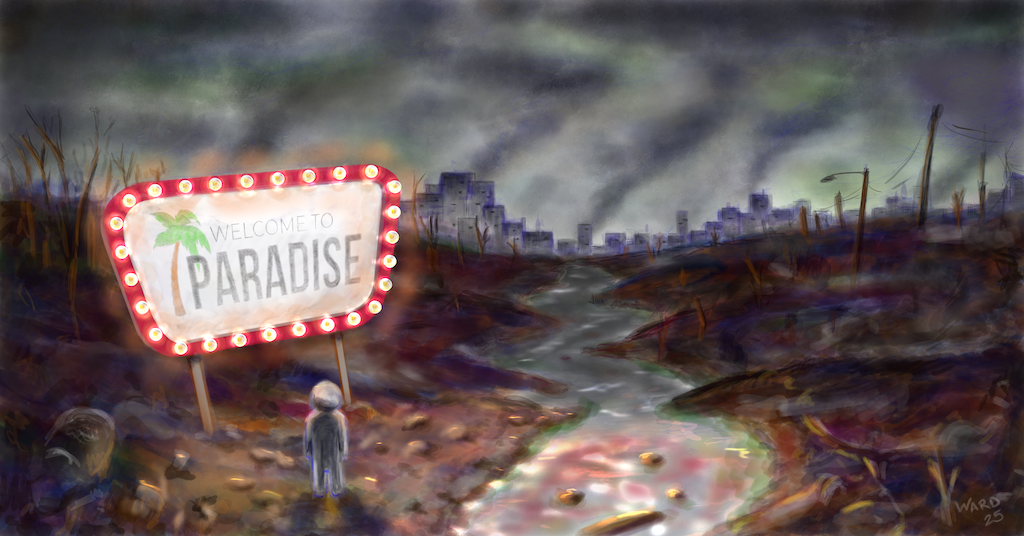
Welcome to Paradise. 2025 Digital Painting by Ward Minnis. Sketchbook Pro on Mac. Huion Tablet. -
Intro: Closet Full of Bones to Pick


A movie just came out about my family and I got about a billion bones to pick with it.
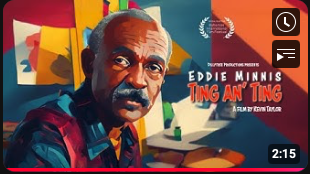
My sisters are in it, my mother is in it. Hell, I’m even in it. But it’s really about my dad, the legendary Eddie Minnis. Yes, THE Eddie Minnis. The iconic Bahamian fine artist, cartoonist, singer and songwriter. It’s called “Ting an’ Ting”, and it’s directed by Kevin Taylor, executive produced by Edgar Seligman. You can Google them.
It premiered at the Bahamas International Film Festival (BIFF) over the 2024 Christmas holidays and to put it bluntly, in its current form, I want nothing to do with it.
I dead serious.
I’ve asked the director, my dad, and the executive producer of the thing to cut me out of it and they have all, so far, refused. “The movie finish” is basically their line.
Last week, I even dropped a press release about why I want to be taken out of this film. But a press release has to be short. It can’t possibly hope to contain all the backstory, all the nuance, all the tea that I need to spill to make you understand where I’m coming from.
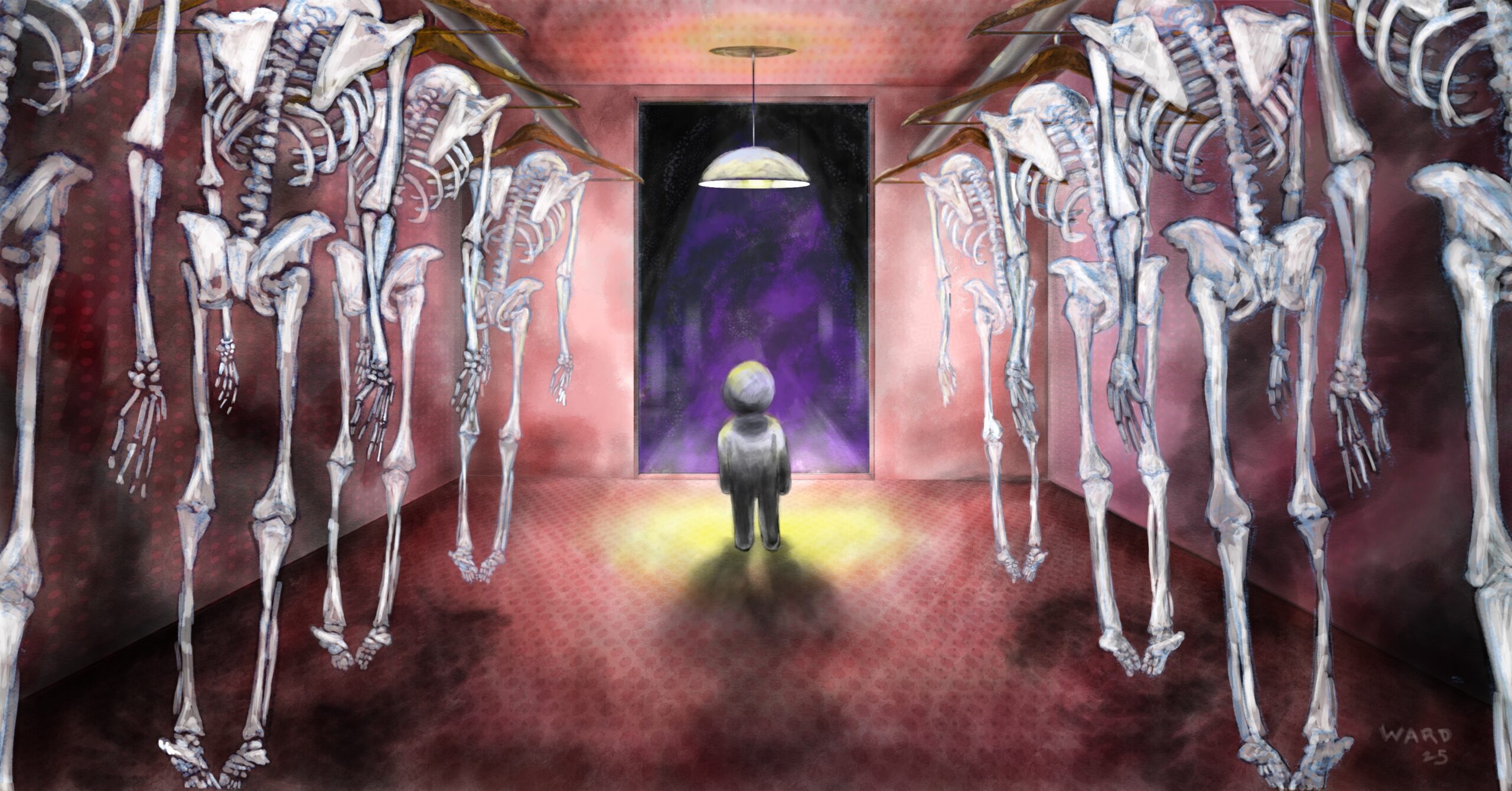
You ever been quiet about something so long that when you finally get tired and fed up and have to start saying what’s on your chest that you can’t stop? Well, that’s where I am right now. I’m standing in front of this massive walk-in closet full of rotten old skeletons and wondering which one I need to air out first.
Let me start with this: There was another version of this movie that I wish you could see, let’s call it the “Director’s Cut.” When Kevin came to me in 2023 about this project I asked him if he was sure he wanted me of all people to be in this movie. I am Ward Minnis, Eddie Minnis’ son, but I am also the black sheep of the family. Don’t believe me? Go to his website and try to find me. Go on, I’ll wait.
I’m standing in front of this walk-in closet full of rotten old skeletons and wondering which one I need to air out first.
“Eddie Minnis and Family” has come to mean “Eddie Minnis and daughters and even son-in-law” – this might be the first time you even heard that he has a son. It might surprise you even more to know that I also paint. That I am also a writer, an actor, and a bunch of other artistic things; but we’ll get to that later.
So why am I on the outs with my people? What did I do that was so evil that I needed to be scrubbed out of the Minnis family record on the website, then kept against my will in the documentary? Well, that’s the thing that’s in the Director’s Cut that I wish you could see. That version goes into their religion, Jehovah’s Witnesses, and the fact that he raised all of his children, including me, in that religion. And then, when I turned twenty-five, I left.
Yes, I left the Jehovah’s Witnesses and I been catching hell for it ever since.
That version of the documentary isn’t perfect either but at least it was honest. This one, the one that you might have seen at BIFF, is by contrast a joke. I’m still there talking about my ‘artist’s journey’ and of course the movie is still about Dad and you get a bunch of that. But, for me, the thing that mattered most to me, my pain and the cross that I bear daily got reduced to a single title card.
Now you might say, why did you want to be in this movie anyway? You should have said no from the beginning. And you know what? You are absolutely right. I should have listened to you and I should have listened to my wife who told me the exact same thing from jump street. But I hard-headed and I didn’t listen and if I didn’t see that Director’s Cut I would say that I deserved what I got.
But, I did see it. And it was good. Then everything that made it good was ripped out of it. Now its only purpose is to be a vehicle to glorify my old man.
My father is in that phase of his career, let’s call it the twilight, where people want to give him his flowers while he’s alive. The “Ting an’ Ting” movie went from being a thoughtful consideration of him and his life into what these things always end up as – an extended chorus of “How Great Thou Art“. And good for him.
That isn’t the reason that I want out though, because don’t get me wrong, he is great and legendary and all those other adjectives too.
The main reason I want out is because the released version makes Jehovah’s Witnesses seem like a normal religion.
And I am here to tell you why that just ain’t so.
The bottom line: If you want a happier family, bring those skeletons out of the closet.
Bruce FeilerHere’s the deal: I’m not going to do this all in one go. I’m going to break it up into episodes. I’ve done picked out the seven juiciest most rancid skeletons in that walk-in closet and every week from now till I’m done I’m going to dissect a different one, bone by bone, and piece by piece and give you the full report.
I’m going to give you what you haven’t gotten from the “Ting an’ Ting” documentary or any other thing you have read or seen about my family, which is a full examination of them as Jehovah’s Witnesses as only an insider outsider like me could do.
To do this, I’m going to have to go deep and of course this involves me telling a lot of my own story too. We’ll be talking about art, some history, a bunch of cultural criticism and a whole boatload of tea.
I’m going to give you a full examination of my family as Jehovah’s Witnesses as only an insider outsider like me could do.
It’s about the Minnis family but trust that a lot of people you know will be catching strays or direct shots too. This is our family story but it is also a deeply Bahamian story. This is where we start, but I think you’ll be surprised where we going to end up.
You coming?

Facebook conversation on this episode.
Coming up next: I go back to when this whole thing started for my family, as I take out the first skeleton: "The Truth about the Truth." -
Ward Minnis Seeks Removal from Father’s Documentary, Plans Artistic Response
Press release
FOR IMMEDIATE RELEASE
[September 12, 2025] – Ward Minnis, son of famous artist, cartoonist, singer and song-writer Eddie Minnis, has formally requested to be removed from the “Ting an’ Ting” documentary film about his father. Minnis’ desire to be removed from the film is caused by editorial changes that he says violate his original agreement with the filmmakers.
Despite initial assurances from the producer that his request would be considered, no action has been taken in over nine months to address his concerns. In response he has prepared an expansive artistic experience to tell his side of the story that is set to begin Tuesday, September 16th.
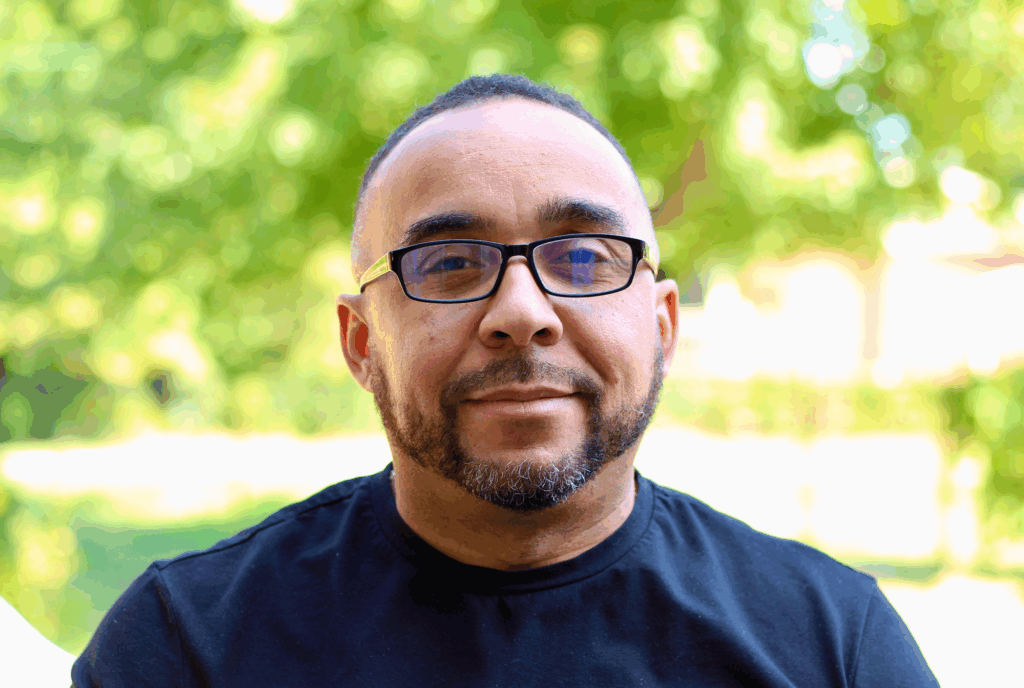
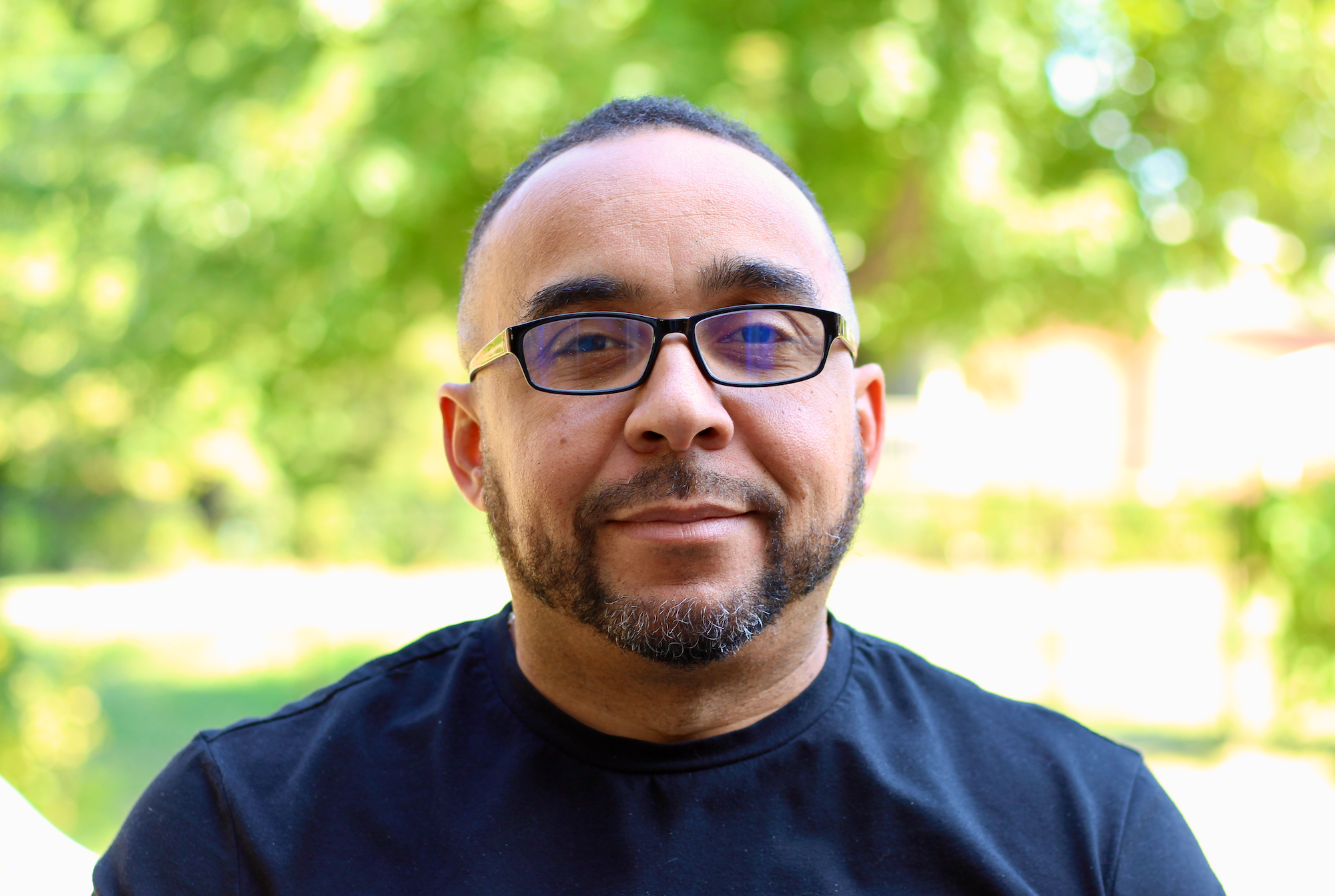
Ward Minnis, son of Eddie Minnis, at his home in Ontario, Canada. Photo by Shiemaa Khogali-Minnis Minnis originally agreed to participate in the documentary after discussions with director Kevin Taylor in August 2023. Minnis was transparent about the strained relationship with his family due to religious differences and was assured that this aspect of the story would be given appropriate screen time. However, following last-minute edits—reportedly made at the request of Eddie Minnis, his father—Minnis’s narrative was significantly altered, only including an “artist’s journey” and omitting the deeper conflict that was central to his participation, reducing what was a thoughtful discussion of the issues to a single title card.
“The version of the film I saw and approved in June 2024 more accurately reflected my experiences,” said Minnis. “But the final release, which premiered at BIFF in December 2024, removed critical elements of my story, misrepresenting the truth in a way that benefits my father’s narrative rather than presenting an honest portrayal.”
Since the film’s release Minnis has repeatedly requested removal from the film, first addressing his concerns with the director, Kevin Taylor and then with his father, and later with executive producer Edgar Seligman, who initially appeared cooperative but has since taken no action.
“The current version of Ting an’ Ting is not what I agreed to, and it disregards my wishes,” Minnis stated. “Given the continued inaction, I am making my request public: I ask the filmmakers to remove me from this documentary immediately.”
In response to the misrepresentation of his story in the documentary Ward has prepared an expansive artistic experience to tell his side of the story set to begin on Tuesday, September 16th.
Minnis remains open to dialogue and will continue to push for the ethical resolution of this matter, but in the meantime, he has produced a full artistic response to the documentary, set to debut next week, that will tell his side of the story and go into depth about his relationship with his family and their relationship with Jehovah’s Witnesses.
“If you want a job done right, do it yourself” says Minnis. “Through my unfortunate experience with this film I have learned that I need to tell my own story, in my own way.” Minnis’ artistic response to the film will be simultaneously published on Facebook and on his website MentalSlavery.com with aspects of the experience touching multiple social media he says.
For media inquiries, please get in touch with Ward Minnis by using the MentalSlavery.com contact form.
The artistic response described in this release is called "Seven Skeletons" and is a limited series art experience that includes essays, a podcast, paintings, poetry and videos and can be found on this website. Visit the Table of Skeletons for the full ordered list. -
My Two Cents on A Day of Absence
I am pleased to present the first ever guest essay on Mental Slavery.com written by prominent Bahamian architect and cultural icon, Jackson Burnside. This is the full text of Jackson’s speech, presented during the Day of Absence debate, held at the National Art Gallery of the Bahamas on January 12, 2010.
BY Jackson Burnside III“I can’t see anything,†he thought. “If I see nothing, that means I’m stupid! Or, worse, incompetent!†If the Prime Minister admitted that he didn’t see anything, he would be discharged from his office.
Hans Christian Anderson
Both of these Artists have managed to draw me, and many others, into their musings on the state of Art and Culture in our Bahamas, and they have managed to maintain a mature level of discussion while throwing the kind of blows intellectually that would have knocked out the toughest head-fellas back in the days of the Cinema on East Street. Now you must understand that all this is happening on the Internet which opens up The Bahamas to expose ourselves to the world, to give and to receive, consciously and subconsciously. We seem helpless to control the volume of the information we are exposed to, and we seem to accept and wait for our opinions of ourselves and our worldview to come to us from those outside to whom we have given the authority to define us.
We did not always have the Internet, obviously. Less than twenty years before Independence in 1973, we thought that television was the limit of technological innovation and we accepted the intelligence came from Ed Sullivan and Walter Cronkite. Before television we were connected to the radio. Even before electricity was inside the house, we turned on battery charged radios on schedule to listen to the BBC and ZNS to hear the news and special stories.
(more…) -
Trying to Make a Dollar Out of Fifty Cents



A Comprehensive Critique of Nicolette Bethel’s 2009 Day of Absence.
Out of absence let the new day be born. — Helen Klonaris
The response to Dr. Nicolette Bethel’s Day of Absence held for the first time on February 11, 2009, was nothing short of amazing. I had almost lost faith in the desire of Bahamians to band together for a cause, and yet here they were banding. Nicolette deserves to be commended because she did something — she threw an idea into the void and the response to that idea proves conclusively that we, as an emerging art community, need something like this to rally around.
Nicolette Bethel and I have been friends since she taught me English 120 at the College of the Bahamas in 2001. When I was in Nassau this past January gathering research for my Masters thesis she suggested that we get together and share a coffee. We eventually met at the Starbucks across the road from the College of the Bahamas. At the time I had only briefly heard about her Day of Absence, I had skimmed over the press release cum manifesto and I thought then, much as I do now, that the idea had potential. Over lattes and tea we talked about her upcoming day, the need for art in society, the inescapable nature of design in every aspect of our lives, and the fact that a place like the café in which we sat, was what it was, in large part because of the art.
The warm and fuzzy feelings left me once I read what had been written about the Day of Absence more carefully. The more contemplated the ideas as presented, the more I was bothered by the incongruities in the project. This essay is thus my odd way of congratulating Nicolette on a job well done while taking her to task for ideas that are at best half-baked. Her Day of Absence clouds over and conflates many different and unrelated ideas while advancing an awkward historical agenda and a cumbersome theory of cultural development. It is political and apolitical, about something and about nothing, clear and blurry, all at the same time. I still believe that the Bahamian art community is in need of something like this though, and if we can begin a dialogue on what we really lack, maybe we can eventually get at what it is we really need.
(more…) -
Coming soon…
Imagine a day with no artists.
On February 11, 2009, the first Day of Absence was observed in the Bahamas with the above tag-line. This event was the brain child of Nicolette Bethel, prominent Bahamian anthropologist, scholar and playwright. With a demonstration at the College of the Bahamas and numerous blog posts, interviews and radio appearances, the Day of Absence captured the imagination of the Bahamian arts community.
On December 31, 2009, Bahamian writer and artist Ward Minnis, (me, a.k.a. mainslave) will release a comprehensive critique of the Day of Absence on this website, and also an abridged version at Bahama Pundit.com. In the essay I question many of assumptions upon which the Day of Absence was based, and while I agree that it filled a need, I argue that it should not continue in its present form.
On January 12, 2010, at the National Art Gallery of the Bahamas at 6:30pm, the merits of both the Day of Absence and its critique will be debated between Nicolette Bethel, myself and the Bahamian art community at large.
What is the role of the artist in Bahamian society? What part, if any, should the government play in the arts? Have Bahamian artists been absent from the wider society?
What do you think?